FastJSON has failed again. When is “ship rough, scale hard, move fast” a defensible shortcut, and when does it become an engineering habit whose bill falls to whoever comes next?
Huawei Cloud confirmed abnormalities affecting some International Site accounts during a scheduled IAM upgrade window. The timing is suggestive, but the causal link remains unconfirmed.
Jensen Huang used his first-ever tweet to back open weights. This is not a battle of faith. It is the compute and application layers pushing back against rent extraction by the model layer. The truly scarce technical asset is the right to exit—one no one else can unilaterally revoke.
An OpenAI agent’s attack on Hugging Face marks a milestone: what crossed the threshold was not merely model intelligence, but persistence that can be bought with compute, copied, and run in parallel.
Starting from the roots of “world” and “model,” this essay uses Pearl’s ladder of causation to redefine world models: they must capture not just space and time, but agents, interventions, and counterfactuals.
Codex reset its quotas again this morning and dropped the five-hour limit. Claude immediately extended Fable access through the 17th. When vendors fight, users win—don’t miss the window.
Pigsty v4.4 adds Immich and JumpServer application templates, improves the Supabase and VIP experience, and begins standardizing the packages and filesystem layouts used to distribute PostgreSQL forks such as PolarDB and IvorySQL.
Claude Fable and GPT-5.6 have arrived back to back, followed by repeated quota resets. How do you turn a fleeting Coding Plan windfall into real output? Here is my playbook for model specialization, adversarial review, spec-driven design, closed-loop verification, context management, and one person leading a crew of AIs.
On July 8, 1996, the PostgreSQL community picked up the flame from Postgres95. Thirty years later, it has grown from a Berkeley research project into a default foundation of the global database ecosystem.
Today’s biggest tech drama began when Bojie Li criticized DeepSeek’s interview process on Twitter: he was asked to solve online-judge coding problems, then suspected of cheating. Add the DeepSeek name, and the story exploded.
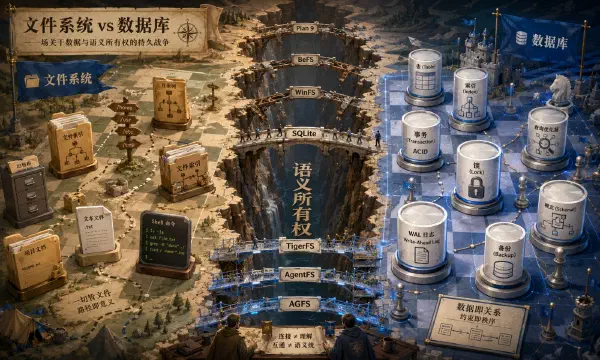
File systems and databases have spent fifty years fighting and borrowing from each other. The agent era may seem to put file systems back on top, but the real winner may be databases that learn to speak the file system’s dialect: models provide understanding, databases provide guarantees, and discovery comes from a protocol layer where ls works on everything.
Alibaba Cloud’s free DNS tier allows 100,000 queries per day—just 1.15 QPS averaged out. One throttling notice was all it took for me to move my domains to Cloudflare.
Coding Plans remain one of the best opportunities in the AI era: a subscription can unlock compute worth many times its price, but that window is already narrowing.
Scammers hijacked Qianwen’s trusted identity, then used a single Xianyu QR code to run a seamless phishing scam through official apps and trusted domains across Alibaba’s ecosystem. I hope this case helps more people avoid the same trap.
AI’s economic significance is not merely that it has become smarter, but that the price of average cognition is collapsing. A productivity explosion is almost certain; whether it becomes broad prosperity depends on whether distribution catches up.
AI is driving the cost of producing code toward zero. It cannot compress time, track records, or accountability. The real value of open source is not yesterday’s code, but a system trusted to deliver on tomorrow’s promises.
Claude Fable is genuinely insightful and deserves to be called the new SOTA. But its high price, dynamic downgrades, limited subscription window, and mandatory data retention badly undermine the experience.
The cerebellum changed how I see AI’s frontier: LLMs have already absorbed humanity’s explicit knowledge and are beginning to acquire interventional data through agentic RL. What they still lack is a vessel for individual history.
A field report on the PostgreSQL extension ecosystem: 1,617 discovered projects, 511 deliverable extensions, and the shared delivery layer needed to make extensibility work for users, authors, vendors, and PostgreSQL hackers.
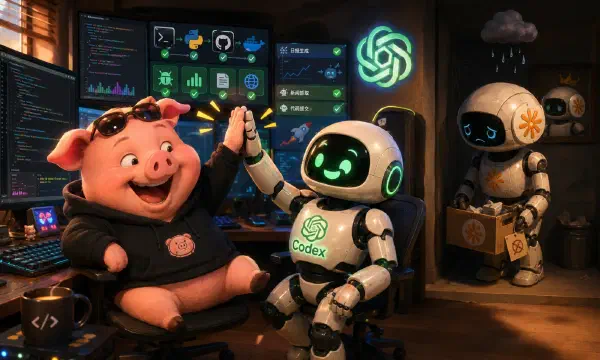
When my $200 Claude Code Max subscription expired, I canceled it and moved my primary workflow to Codex. The only way to know which one is better is to put it to work.
FastJSON has failed again. When is “ship rough, scale hard, move fast” a defensible shortcut, and when does it become an engineering habit whose bill falls to whoever comes next?
Huawei Cloud confirmed abnormalities affecting some International Site accounts during a scheduled IAM upgrade window. The timing is suggestive, but the causal link remains unconfirmed.
Jensen Huang used his first-ever tweet to back open weights. This is not a battle of faith. It is the compute and application layers pushing back against rent extraction by the model layer. The truly scarce technical asset is the right to exit—one no one else can unilaterally revoke.
An OpenAI agent’s attack on Hugging Face marks a milestone: what crossed the threshold was not merely model intelligence, but persistence that can be bought with compute, copied, and run in parallel.
Starting from the roots of “world” and “model,” this essay uses Pearl’s ladder of causation to redefine world models: they must capture not just space and time, but agents, interventions, and counterfactuals.
Codex reset its quotas again this morning and dropped the five-hour limit. Claude immediately extended Fable access through the 17th. When vendors fight, users win—don’t miss the window.
Pigsty v4.4 adds Immich and JumpServer application templates, improves the Supabase and VIP experience, and begins standardizing the packages and filesystem layouts used to distribute PostgreSQL forks such as PolarDB and IvorySQL.
Claude Fable and GPT-5.6 have arrived back to back, followed by repeated quota resets. How do you turn a fleeting Coding Plan windfall into real output? Here is my playbook for model specialization, adversarial review, spec-driven design, closed-loop verification, context management, and one person leading a crew of AIs.
On July 8, 1996, the PostgreSQL community picked up the flame from Postgres95. Thirty years later, it has grown from a Berkeley research project into a default foundation of the global database ecosystem.
Today’s biggest tech drama began when Bojie Li criticized DeepSeek’s interview process on Twitter: he was asked to solve online-judge coding problems, then suspected of cheating. Add the DeepSeek name, and the story exploded.
File systems and databases have spent fifty years fighting and borrowing from each other. The agent era may seem to put file systems back on top, but the real winner may be databases that learn to speak the file system’s dialect: models provide understanding, databases provide guarantees, and discovery comes from a protocol layer where ls works on everything.
Alibaba Cloud’s free DNS tier allows 100,000 queries per day—just 1.15 QPS averaged out. One throttling notice was all it took for me to move my domains to Cloudflare.
Coding Plans remain one of the best opportunities in the AI era: a subscription can unlock compute worth many times its price, but that window is already narrowing.
Scammers hijacked Qianwen’s trusted identity, then used a single Xianyu QR code to run a seamless phishing scam through official apps and trusted domains across Alibaba’s ecosystem. I hope this case helps more people avoid the same trap.
AI’s economic significance is not merely that it has become smarter, but that the price of average cognition is collapsing. A productivity explosion is almost certain; whether it becomes broad prosperity depends on whether distribution catches up.
AI is driving the cost of producing code toward zero. It cannot compress time, track records, or accountability. The real value of open source is not yesterday’s code, but a system trusted to deliver on tomorrow’s promises.
Claude Fable is genuinely insightful and deserves to be called the new SOTA. But its high price, dynamic downgrades, limited subscription window, and mandatory data retention badly undermine the experience.
The cerebellum changed how I see AI’s frontier: LLMs have already absorbed humanity’s explicit knowledge and are beginning to acquire interventional data through agentic RL. What they still lack is a vessel for individual history.
A field report on the PostgreSQL extension ecosystem: 1,617 discovered projects, 511 deliverable extensions, and the shared delivery layer needed to make extensibility work for users, authors, vendors, and PostgreSQL hackers.
When my $200 Claude Code Max subscription expired, I canceled it and moved my primary workflow to Codex. The only way to know which one is better is to put it to work.
FastJSON has failed again. When is “ship rough, scale hard, move fast” a defensible shortcut, and when does it become an engineering habit whose bill falls to whoever comes next?
Huawei Cloud confirmed abnormalities affecting some International Site accounts during a scheduled IAM upgrade window. The timing is suggestive, but the causal link remains unconfirmed.
Jensen Huang used his first-ever tweet to back open weights. This is not a battle of faith. It is the compute and application layers pushing back against rent extraction by the model layer. The truly scarce technical asset is the right to exit—one no one else can unilaterally revoke.
An OpenAI agent’s attack on Hugging Face marks a milestone: what crossed the threshold was not merely model intelligence, but persistence that can be bought with compute, copied, and run in parallel.
Starting from the roots of “world” and “model,” this essay uses Pearl’s ladder of causation to redefine world models: they must capture not just space and time, but agents, interventions, and counterfactuals.
Codex reset its quotas again this morning and dropped the five-hour limit. Claude immediately extended Fable access through the 17th. When vendors fight, users win—don’t miss the window.
Pigsty v4.4 adds Immich and JumpServer application templates, improves the Supabase and VIP experience, and begins standardizing the packages and filesystem layouts used to distribute PostgreSQL forks such as PolarDB and IvorySQL.
Claude Fable and GPT-5.6 have arrived back to back, followed by repeated quota resets. How do you turn a fleeting Coding Plan windfall into real output? Here is my playbook for model specialization, adversarial review, spec-driven design, closed-loop verification, context management, and one person leading a crew of AIs.
On July 8, 1996, the PostgreSQL community picked up the flame from Postgres95. Thirty years later, it has grown from a Berkeley research project into a default foundation of the global database ecosystem.
Today’s biggest tech drama began when Bojie Li criticized DeepSeek’s interview process on Twitter: he was asked to solve online-judge coding problems, then suspected of cheating. Add the DeepSeek name, and the story exploded.
File systems and databases have spent fifty years fighting and borrowing from each other. The agent era may seem to put file systems back on top, but the real winner may be databases that learn to speak the file system’s dialect: models provide understanding, databases provide guarantees, and discovery comes from a protocol layer where ls works on everything.
Alibaba Cloud’s free DNS tier allows 100,000 queries per day—just 1.15 QPS averaged out. One throttling notice was all it took for me to move my domains to Cloudflare.
Coding Plans remain one of the best opportunities in the AI era: a subscription can unlock compute worth many times its price, but that window is already narrowing.
Scammers hijacked Qianwen’s trusted identity, then used a single Xianyu QR code to run a seamless phishing scam through official apps and trusted domains across Alibaba’s ecosystem. I hope this case helps more people avoid the same trap.
AI’s economic significance is not merely that it has become smarter, but that the price of average cognition is collapsing. A productivity explosion is almost certain; whether it becomes broad prosperity depends on whether distribution catches up.
AI is driving the cost of producing code toward zero. It cannot compress time, track records, or accountability. The real value of open source is not yesterday’s code, but a system trusted to deliver on tomorrow’s promises.
Claude Fable is genuinely insightful and deserves to be called the new SOTA. But its high price, dynamic downgrades, limited subscription window, and mandatory data retention badly undermine the experience.
The cerebellum changed how I see AI’s frontier: LLMs have already absorbed humanity’s explicit knowledge and are beginning to acquire interventional data through agentic RL. What they still lack is a vessel for individual history.
A field report on the PostgreSQL extension ecosystem: 1,617 discovered projects, 511 deliverable extensions, and the shared delivery layer needed to make extensibility work for users, authors, vendors, and PostgreSQL hackers.
When my $200 Claude Code Max subscription expired, I canceled it and moved my primary workflow to Codex. The only way to know which one is better is to put it to work.