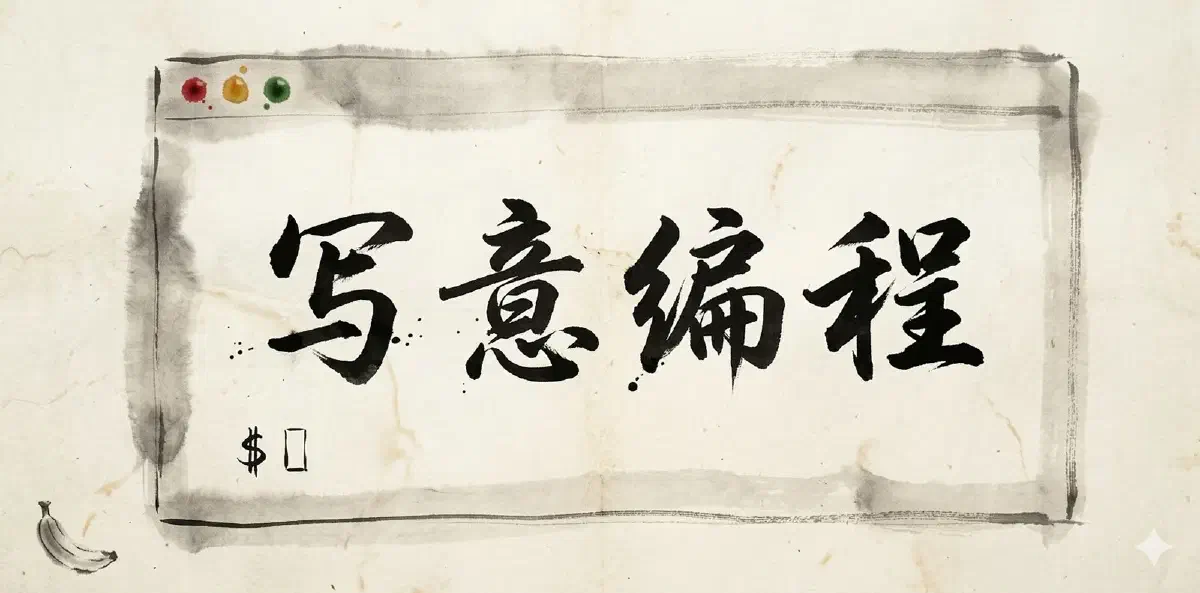

Last year Andrej Karpathy coined the term “Vibe Coding.” The rough idea is simple: you tell the AI what you want, it spits out code, you skim it, decide it looks close enough, and move on.
The term spread quickly because it captures something real. Programming is shifting from “control every line precisely” to “describe the intent and let AI implement it.”
That raises a practical translation problem: what should “Vibe Coding” be called in Chinese?
Lu Qi mentioned this in a talk and said there still was not a good Chinese translation, so he kept using the English phrase. That in itself is revealing. A good translation lets a concept take root. A bad one makes people shrug and keep speaking English.
“Vibe” is especially awkward because it does not have sharp edges. It is not a clean technical term. It is more like mood, feel, posture, or style. That makes the translation both interesting and difficult.
The Obvious Candidates#
“Atmosphere programming”
This is the most literal translation. The problem is that it sounds like it refers to ambience: soft lighting, background music, coffee refills, maybe a mechanical keyboard. The meaning drifts completely.
“Casual programming”
This captures the relaxed part, but overshoots. It implies carelessness, almost random coding. That is not quite right. In Vibe Coding, you still need to know what you want. What changed is the path from idea to implementation.
“Free-association programming”
Better than “casual,” because it keeps some sense of thinking. But it still feels vague and essayistic rather than technical.
“Feel-based programming”
Not wrong, just lifeless. It is the kind of translation that is semantically defensible and culturally dead.
“Intuitive programming”
This is closer. Vibe Coding definitely contains a strong intuitive component. But it overweights judgment and loses the creative looseness of the original.
“Telepathic programming”
Too sci-fi. It sounds like you are writing code with brainwaves.
“Intent-based programming”
This is probably the closest to the technical essence. But it is so correct that it becomes colorless, and it collides with the existing phrase “Intent-Based Programming.” It also misses the relaxed “just ship it” tone inside “Vibe Coding.”
A pun-based translation
Funny, maybe, but not something you can actually use as a term.
Why “Xieyi Programming” Is Better#
In traditional Chinese painting, there are two broad styles: gongbi and xieyi.
Gongbi is meticulous. Every feather gets detailed brushwork.
Xieyi is expressive. A few strokes aim for the spirit rather than exact form.
Traditional programming is gongbi.
You write line by line, tune every detail, and stay in tight control.
Vibe Coding is xieyi.
You emphasize intent over implementation.
You want the shape and spirit to be right, not every brushstroke.
This is not a forced analogy. Structurally, it lines up almost perfectly.
There is also a second advantage:
the character used in xieyi is the same one used in the Chinese verb for “writing” code.
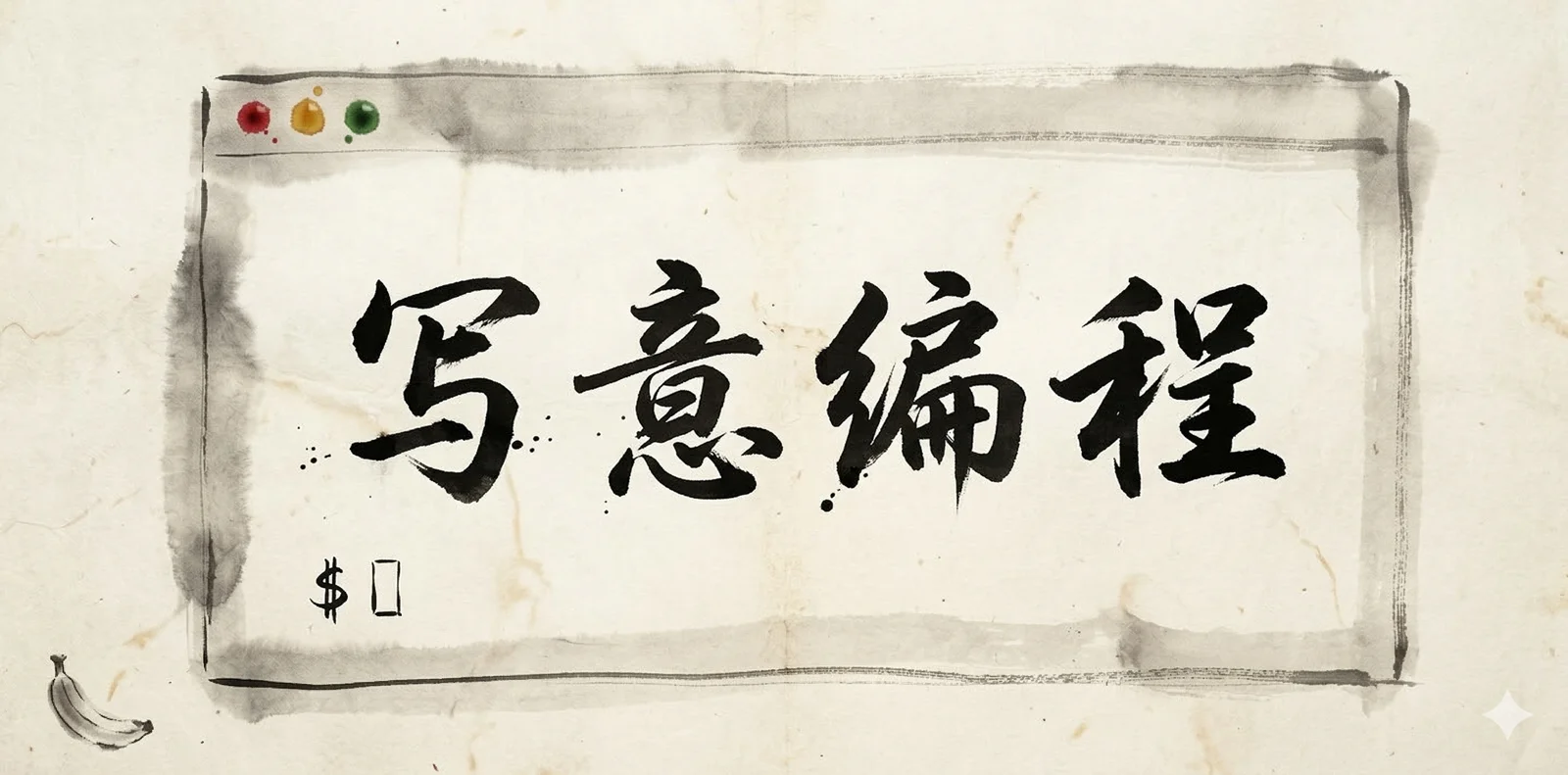
So the phrase naturally belongs in a programming context. It is both an artistic posture and a coding method.
Then there is the cultural weight.
Xieyi already carries centuries of aesthetic meaning for Chinese readers.
It immediately communicates “not strict formal precision, but expressive fidelity.”
You do not need to explain the phrase from scratch.
That kind of instant resonance is something literal translations cannot match.
And finally, the tone is right.
When Karpathy coined “Vibe Coding,” the phrase had some swagger. It was playful, confident, slightly ironic.
Xieyi Programming has a similar energy.
It does not sound like a dead technical term. It sounds like a real phrase with attitude.
If you tell someone, “I’m doing xieyi programming right now,” the posture is already there.
Closing#
A good translation is not about matching words one by one. It is about finding the word that was already waiting for the concept in the target language.
This shift in programming, from precision to intent, from hand-written implementation to AI-assisted realization, already has a ready-made concept inside Chinese aesthetics.
So the next time you open Cursor or Claude Code, describe what you want, and watch the code grow on its own,
you are not just Vibe Coding. You are doing Xieyi Programming.
Credit#
I had this translation in mind a few months ago after hearing Lu Qi discuss the term. When I launched Piglet.Run, I even used it in the tagline: “one click to launch your xieyi programming environment.”
As far as I can tell, I have not seen anyone else use this translation publicly yet, so I am claiming first publication here.