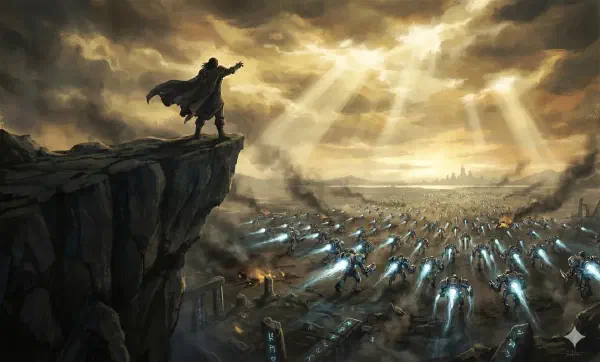
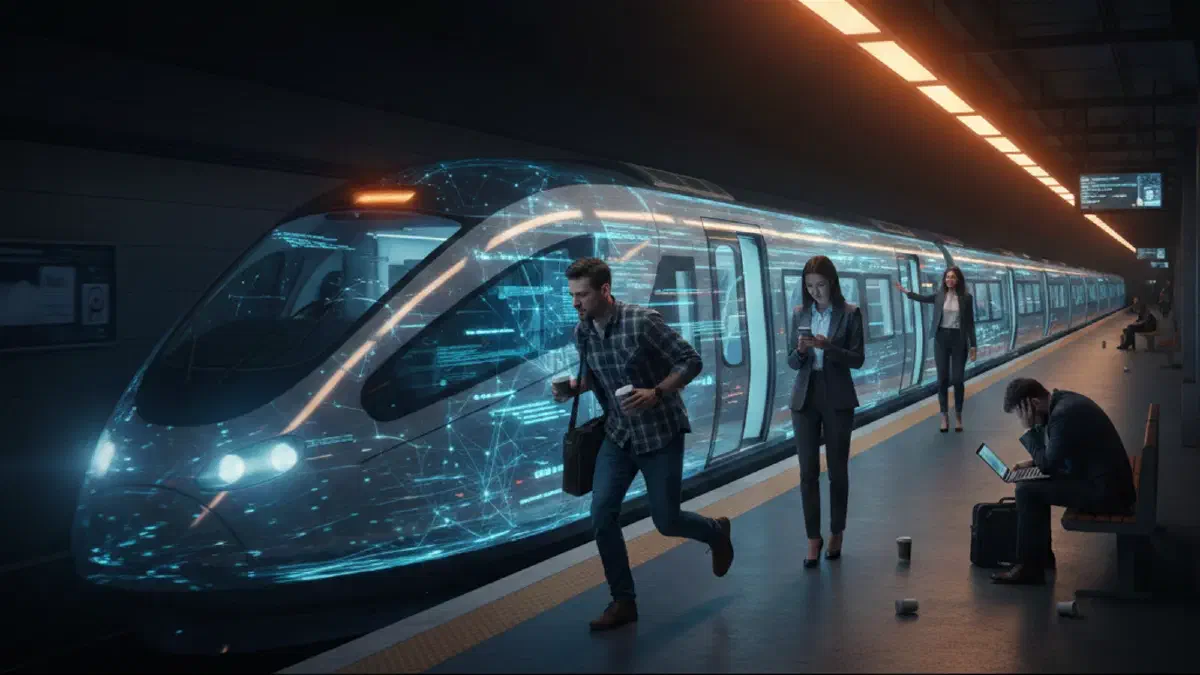

For this generation of knowledge workers, the greatest danger is not that they “don’t know how to use AI.” It is that they still think they have a 20-year adjustment window. They don’t.
We may be the first generation of knowledge workers in human history who will watch machines surpass our core capabilities halfway through our careers.
Technological change did not use to work this way. The steam engine replaced muscle, the power loom replaced hands, and the automobile replaced legs. Machines have been replacing physical labor for two centuries, but cognitive work always seemed safe: however powerful a machine became, it could not think. That premise broke in 2023. By 2026, the problem has become urgent.
People at the AI frontier may be using this brief window to burn tokens like mad, gaining 10x-plus leverage as they race to seize the advantage. Most people still have not internalized what that means. It is Lunar New Year—a good time to lay the question out plainly.
Acceleration Is the Key Variable#
Start with a few numbers.
Electricity took 46 years to go from invention to adoption by 50% of American households. The telephone took 35 years, television 22, the internet seven, and smartphones less than five. ChatGPT reached 100 million users in 2 months.
The point is not that “AI is popular.” It is this: the time each wave of technological change gives humanity to adapt is shrinking exponentially.
During the Industrial Revolution, a textile worker had an entire generation to adjust. His livelihood was gone, but his son could learn another trade. When automobiles replaced carriages, carriage makers were done for, but society still had a 20-year transition. AI may not give us 20 years. It may give us fewer than five.
Most AI Discussion Never Gets Below the Surface#
Most people discuss AI by listing what it “can do”: write code, make videos, create art, translate, build slide decks, handle customer support. All true, and all superficial. It is like discussing automobiles in 1900 by saying they could carry people and cargo and move faster than horses. You would be right, while completely missing what the automobile would actually change: urban form, suburbanization, oil geopolitics, traffic law, and youth culture.
In Understanding Media (1964), Marshall McLuhan offered a framework that still holds: the true social impact of a new medium lies not in the content it carries, but in how it changes the way humans perceive and organize the world. His example was the light bulb. A light bulb has no “content.” It carries no text and broadcasts no sound. Yet it created the nighttime economy, shift work, and nightlife, completely rewriting society’s temporal structure.
Seen through that lens, AI is changing at least three things:
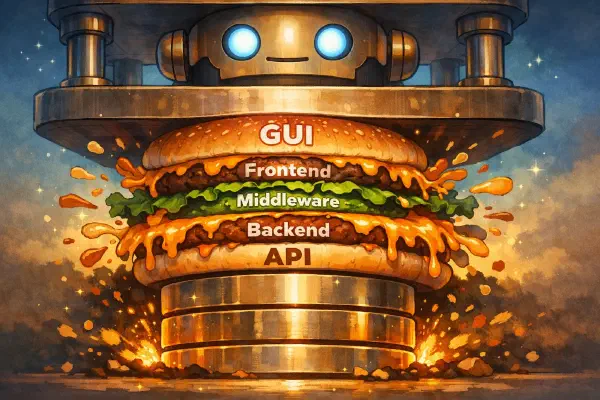
First, the scarcity of professional knowledge is collapsing. In the past, legal advice meant paying a lawyer, a diagnosis meant seeing a specialist, and a system design meant hiring a consultant. Information asymmetry is profit; a monopoly on knowledge is pricing power. AI is turning solid-B professional expertise into something close to a public good. This is not an efficiency gain. The knowledge economy’s foundation of value is starting to crumble. Cloud computing did the same to traditional data centers: once the underlying resource is commoditized, middlemen higher in the stack who profit from information asymmetry are in danger.
Second, the boundary between “creation” and “consumption” is blurring. Is someone who uses AI to write code a developer or a product manager? Is someone who asks AI for a design draft and then tweaks it a designer or an art director? This is not a semantic game. Once job definitions change, systems for valuing skills must change with them, and so must education. Yet those two systems move an order of magnitude more slowly than the technology itself.
Third, the process of thinking is being externalized. In the past, you wrote an article by forming the idea in your head, composing a mental draft, and then putting it on the page. Increasingly, people now throw half-formed ideas at AI, iterate through conversation, and end with a collaboration between human and machine. Your prompt is the trace log of your thought process. You can review not just code but your reasoning. You can reuse not just modules but your “thinking templates.” You can audit not just the result but how you got there.
Four Historical Patterns#
One: the biggest casualties are in the middle, not at the bottom.
The printing press did not eliminate illiterate peasants—they were not using manuscripts in the first place. It eliminated scribes, people who made their living as information intermediaries. The automobile did not eliminate horses; horses are still here. It eliminated carriage makers, whose craft, honed over 20 years, became worthless overnight. Search engines did not eliminate old people who never went online. They eliminated encyclopedia salespeople and reference-desk librarians.
The pattern is clear: technological revolutions do not hit the people furthest from the technology. They hit mid-skilled workers whose work falls squarely inside the replacement zone. AI’s impact on translation, software development, content writing, legal services, and accounting follows the same pattern.
Two: societies adapt through generational replacement, not individual reinvention.
It was not old coachmen who learned to drive automobiles. A new generation simply grew up in a world of cars. It was not newspaper reporters who became bloggers. A cohort that had never entered a newsroom began writing directly on the internet.
Every technological revolution therefore has a window in which one generation is sacrificed. These people did nothing wrong; their skills simply came of age just as technology began replacing them. Knowledge workers between 35 and 50 need to ask seriously whether they are inside that window.
Three: the largest consequences are second-order effects, not first-order effects.
The printing press’s first-order effect was that books became cheaper. Its second-order effects were the Reformation and the rise of the nation-state. The telephone’s first-order effect was that calling became easier. Its second-order effect was the permanent blurring of the boundary between work and life. Search engines’ first-order effect was that looking things up became faster. Their second-order effect was a redefinition of what it meant to be smart: memory lost value, while the ability to ask good questions gained it.
AI’s first-order effect is that work gets done faster. What is the second-order effect? Nobody knows yet. But history tells us that it will be far larger than the first-order effect—and that it will emerge somewhere we are not currently looking.
Four: institutions lag technology by at least one generation.
The printing press appeared in the 1440s; publishing norms did not mature until the 17th century. In between came 150 years of religious wars and political reorganization. Automobiles became widespread in the 1900s; traffic laws did not mature until the 1930s. The internet exploded in the 1990s; GDPR did not arrive until 2018.
By that pattern, a stable AI governance framework may not emerge until the 2040s. The next 15 to 20 years will be an institutional vacuum—the Wild West. The rules do not exist yet, so the first movers get to write them. For individuals, this is both a risk—there is no safety net—and an opening: first-mover advantage is at its peak.
A Practical Timeline#
Here is one concrete frame of reference. Search-engine adoption unfolded in three phases:
- 2000–2005: Not knowing how to use Google was merely inconvenient. You could still go to the library.
- 2005–2010: Poor search skills began to drag down productivity. “Can you Google that for me?” became an everyday phrase.
- 2010–present: Not knowing how to search is close to functional illiteracy. Society’s basic infrastructure is built on the assumption that you can.
AI is following the same path, only faster:
- 2023–2025: Not using AI merely made you a little less efficient. Writing, researching, and formatting things by hand still worked.
- 2026–2030: Not using AI begins to hurt your ability to compete. The output gap between engineers who use AI-assisted coding and those who do not may reach 10–100x.
- 2030+: Society’s basic infrastructure assumes that you can collaborate with AI, just as it assumes today that you can use a search engine.
We are now crossing from the first phase into the second. This is the most comfortable period—and the one with the largest window for preparation. Once the second phase begins in earnest, the competitive landscape will already be stratified. Catching up will cost far more.
What I Want to Write After the Holiday#
I’m planning a new AI series: informal essays on a few topics I want to explore.
- Historical review: From the printing press to AI, who got crushed by each wave of technological change—and why was it always the middle layer?
- Media analysis: Reexamining AI through McLuhan’s framework, especially his tetrad of media effects.
- Extreme extrapolation: AI augmentation, neural interfaces, and technological divergence—what happens when the gap between people becomes wider than the gap between species?
- Science-fiction audit: Across 7 seasons and 33 episodes of Black Mirror, what has already come true, what is coming true now, and what never will?
- Individual strategy: Not a vague call to “embrace change,” but a practical framework for judgment derived from historical patterns.
Not every essay will be good, but these questions deserve serious thought.
Today is the first day of the Lunar New Year. Happy New Year, everyone.
My deeper wish for you in the year ahead: stay clear-eyed, stay sharp, and don’t linger too long in your comfort zone.